Every road trip starts with a boot full of good intentions and ends with a pile of things you never touched. Packing well is about covering the small number of situations that would otherwise ruin the trip, then leaving room for the things that make it enjoyable.
This list covers the 15 items we would not leave home without, split into safety, tools, comfort and documents, plus a simple packing order that keeps the boot usable.
Key facts
- A tyre pressure gauge and a working spare or repair kit are essential on remote routes.
- High-visibility vests and a warning triangle are legally required in many countries.
- Carry at least one gallon of water per person for desert or mountain drives.
- Keep documents and a physical map in the cabin, not in the boot.
- Check tyre pressures, fluids and lights before departure, not at the first stop.
Documents and money
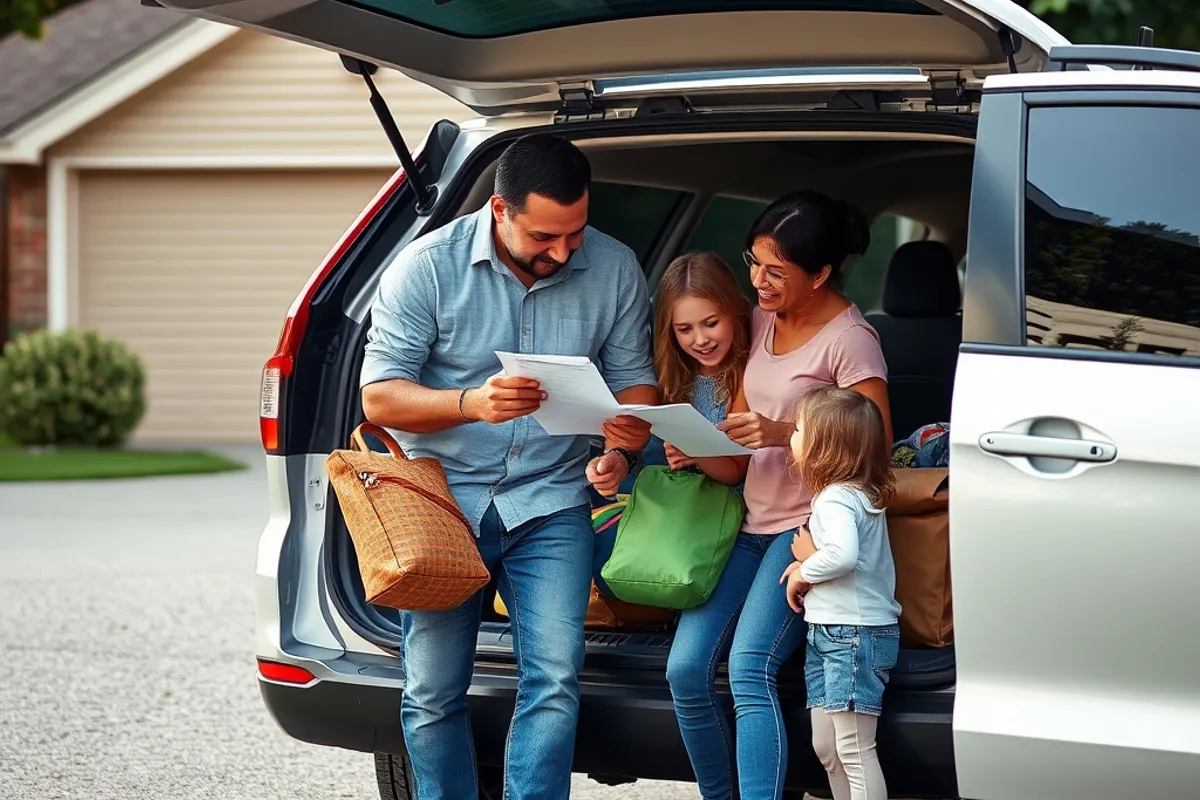
Start with the boring folder: licence, registration, insurance, roadside assistance details and a photocopy or photo of each. If you cross borders, add passports and any vehicle permission letter. Keep them in the cabin where you can reach them at a checkpoint.
Carry a physical map and some cash. Phones die, signals vanish and card readers fail. A small amount of local currency covers tolls, parking and the one cafe that does not take cards. Tell someone at home your route and expected arrival time.
Safety kit that earns its space
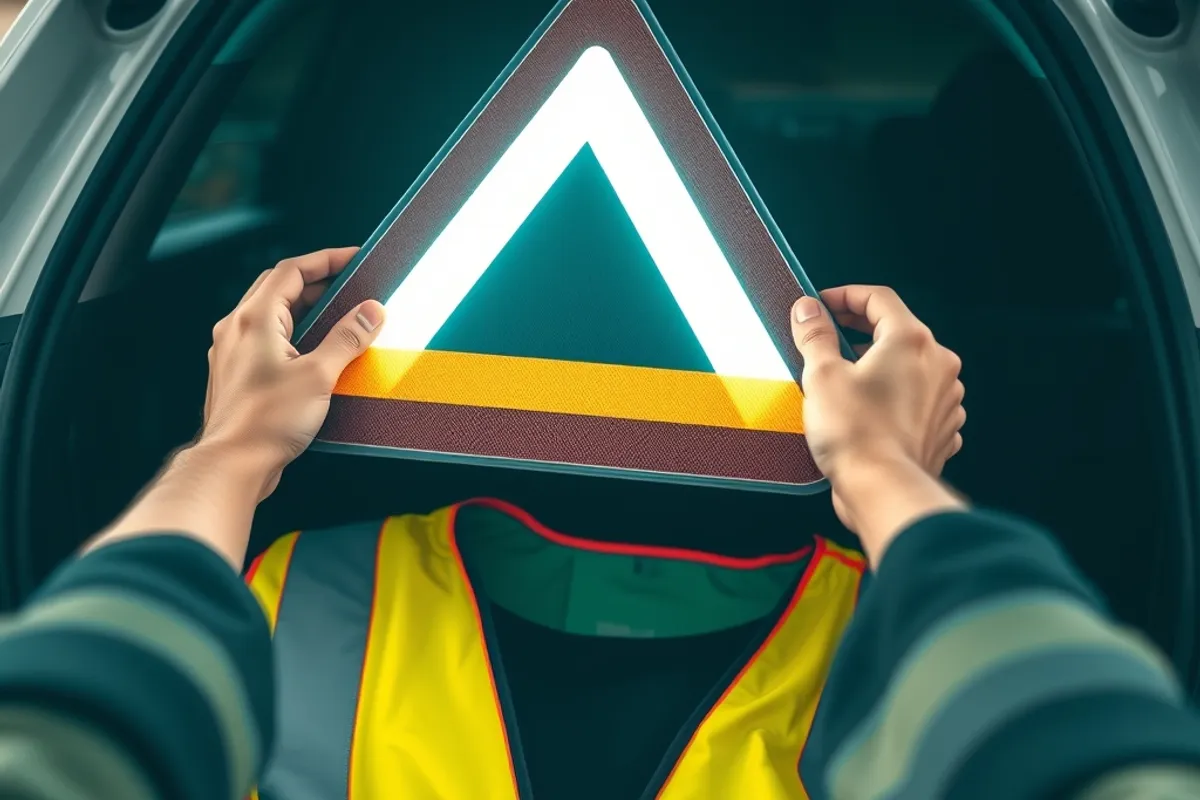
A first aid kit, a torch, a warning triangle and a high-visibility vest are the core. Add a fire extinguisher if your vehicle is older or you tow. In cold climates, pack a blanket, a warm layer and a means of making yourself visible if you get stuck.
Check the expiry dates on the first aid kit and the extinguisher before you leave. A kit you have never opened is not a kit. Know how to use the triangle and where it lives, because you may need it in the dark on a hard shoulder.
Tools and tyre care
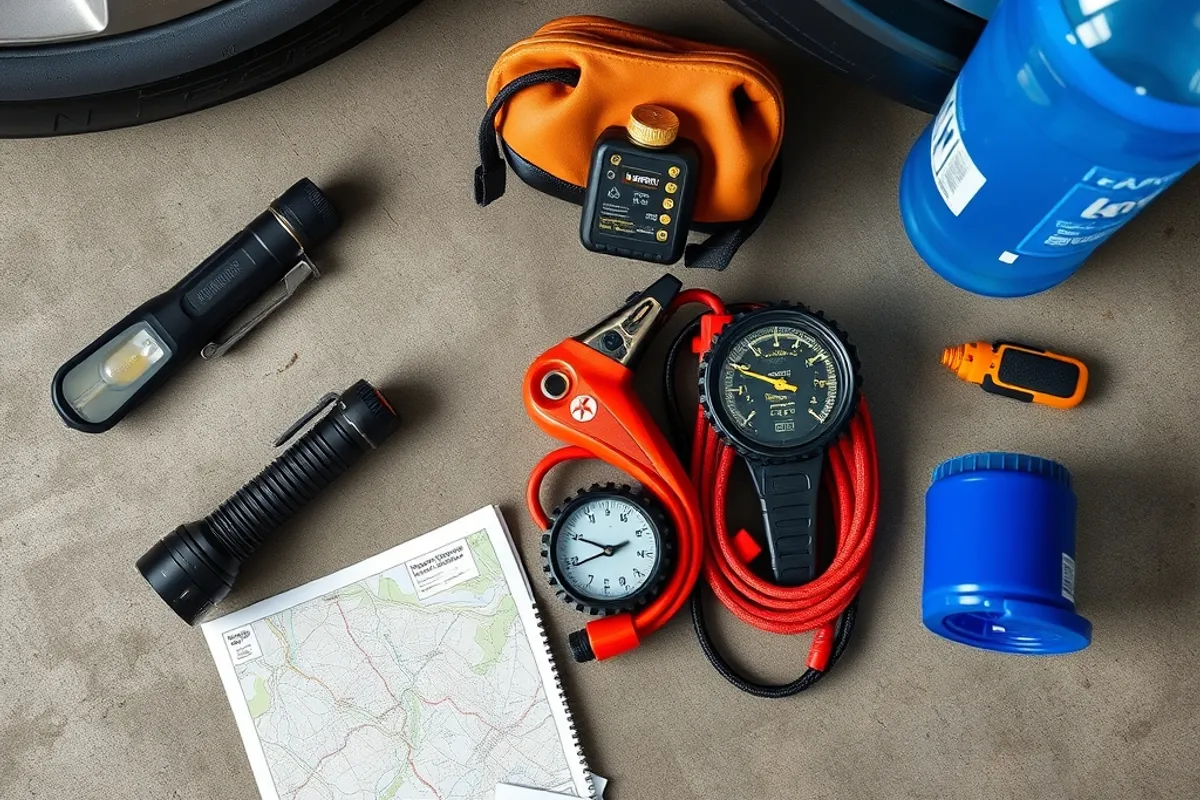
Confirm the spare tyre, jack and wheel brace are present and usable. Many modern cars come with a repair kit instead of a spare, which is useless after a sidewall tear. Add a tyre pressure gauge, a 12-volt compressor and a pair of gloves.
A jump starter pack is worth more than jumper cables if you travel alone. A basic tool roll, duct tape, cable ties and a multitool cover most minor fixes. Do not carry a full workshop; you are packing for a holiday, not a rally.
Fluids and consumables
Check oil, coolant, brake fluid, screen wash and tyre pressures before departure, and top up at home where you know the prices. Carry a litre of engine oil if your car uses any, plus screen wash concentrate and a funnel. A clean microfibre cloth and glass cleaner save windscreens at dusk.
Pack water for the car as well as the people. In hot climates, a gallon per person per day is a reasonable minimum. Keep it in the cabin or a cool box, not in a baking boot, and replace it every few days.
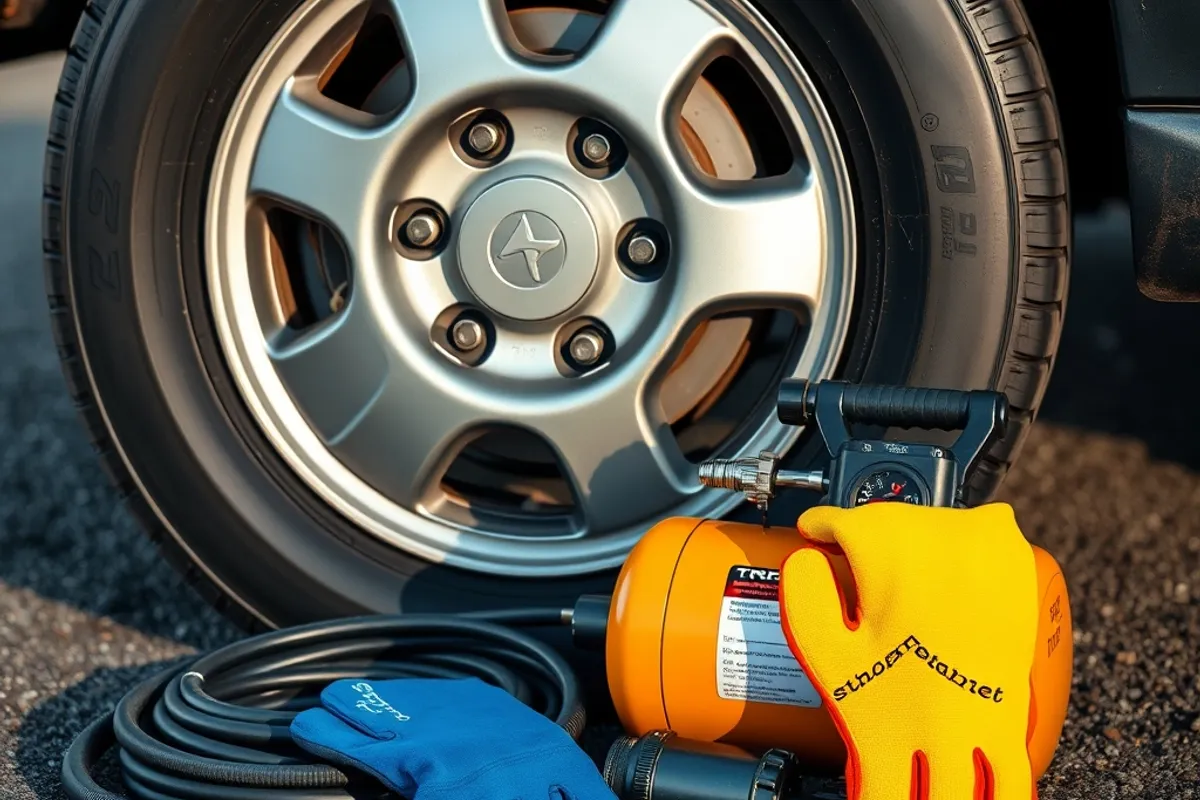
Pack the problems you cannot solve at a petrol station, not the ones you can.
Comfort and sleep
A neck pillow, a light blanket and sunglasses make long days much easier. Layers beat a single heavy coat because cabin temperatures swing. Pack a small bag for the things you need during the day, so you are not digging through the boot at every stop.
If you plan to sleep in the car, a proper mattress and window covers are transformative. Otherwise, book accommodation with parking and check reviews for noise. A bad night ruins the next day's drive more reliably than anything else.
Tech, charging and entertainment
A 12-volt USB charger, a power bank, a long charging cable and a phone mount are the essentials. Download offline maps and playlists before you leave. A small inverter is useful for laptops but adds complexity; most trips do fine with USB power.
Keep a dedicated cable for each device and test them at home. Cable failures are the most common tech problem on the road. If you rely on your phone for navigation, carry a second charging option and a physical map as backup.
How to pack the car, and the verdict
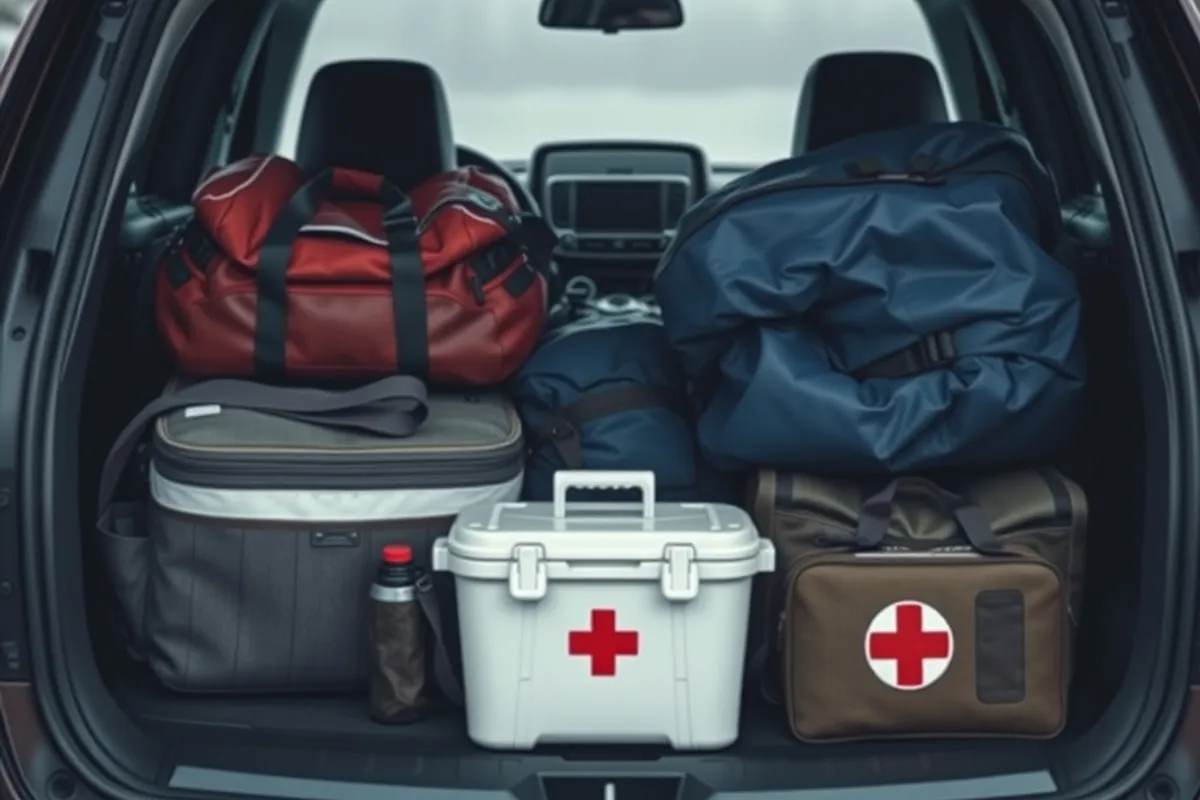
Put heavy items low and forward of the rear axle, keep the parcel shelf clear and leave the emergency kit accessible. Pack the boot in modules: tools, clothes, food and comfort. Soft bags conform to odd spaces better than hard suitcases, and they are easier to carry into a motel.
If you only remember five things, make them water, a torch, a tyre gauge, a first aid kit and your documents. Everything else can be bought on the way. For route ideas, read our best US road trip routes, and browse more Road Trip guides for car preparation.
Official source: nhtsa.gov.